Enhancing End-of-Life Care Planning for clients, family members, and care providers.
Rebecca MacLure
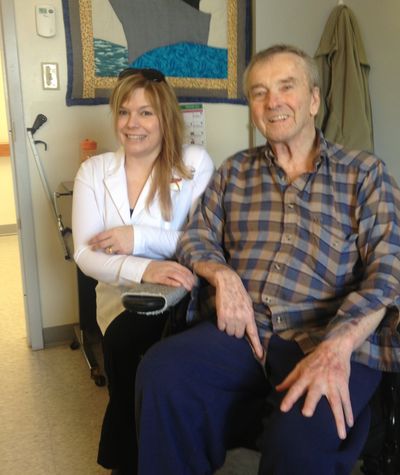
- The purpose of this portfolio is to describe the academic accomplishments and personal growth I have achieved on the way to becoming a nursing PhD student and lay out my plan for future research and development throughout the PhD program.
- My passion for nursing began when caring for my grandparents and other loved ones in their final months of life. My interest in end-of-life care became evident during the baccalaureate program, and I went to a long-term care setting after graduation. During my master’s program, I developed presentations and papers on end-of-life topics, including advanced care planning, education for patients and family members, reduced hospital stays, and comfort care for end-of-life. When I started working with this population, other nurses often asked me why I chose to work in this area. My answer was that I intended to help one patient at a time die a peaceful death, knowing we had addressed their end-of-life care needs.
- Through my continued study and research, I intend to seek opportunities to implement changes in practice that offer improved end-of-life care for patients, family members, and care providers so that I may help a more significant number of those at end-of-life achieve peace in dying and death.

Hello
Rebecca MacLure
Welcome to my online portfolio showcasing my identity as a nursing PhD student.
The following sections will bring to light my nursing experiences providing end-of-life care and how the four pillars of nursing contribute to my practice.
Research, Teaching and Pracice

My teaching and practice philosophies go hand in hand as they are based on components of collaboration and care coordination for clients and families facing end-of-life decisions in developing a care plan that respects their autonomy while addressing their unique individual care needs. By promoting empathy and kindness in relationship building, clients and family members become more open to facing care plan decisions as they arise and working together with a team to overcome these challenges.
Schuster (1993) shares how feminist scholars value people's ability to share their experiences with others while protecting their autonomy. In this way of thinking, the thoughts and opinions of all group members will be considered while collaborating to create a plan that is acceptable to all members. I am invested and involved in sharing knowledge with clients and family members. I have compassion for the client and will be present to listen to them and their family members to discuss their health care needs and engage with them in the process of dying and death. Feminist scholarship promotes body, mind, and spirit involvement and recognizes the connections and relationships required to empower actions using "context-specific approaches" to meet individual and group objectives (Schuster, 1993, p. 383). This philosophy may provide a foundation for creating holistic end-of-life care plans for patients and their families in various stages of illness and care settings. Schuster reminds us that even when facing these challenges, remember to take even the most minor opportunities to share a moment of comfort and laughter.
My role is to educate clients, family members, and care providers to aid them in making end-of-life decisions. The information shared will consider their physical, environmental, social, cultural, and spiritual needs to create an individualized care plan. Care providers must offer education in stages as clients and families are ready to be informed and make difficult decisions. These decisions may include advanced care planning, goals of care, how they choose to die, and their preferred choice of where they spend their final hours. By assessing the client's and family member's knowledge level, the educational goals will be set and revisited as the disease process progresses and their needs evolve.
One of my first palliative care patients chose to have a MAiD assessment when their cancer treatments were completed. When they were first referred to the palliative program, they felt they could not cope with their decline in health and thought the option of MAiD might be their only way to die with dignity. They did not know about the palliative care program and its holistic symptom management and care planning goals. I saw this client regularly for one year. New personal and healthcare goals were set each week, and I assisted with a plan to reach these objectives through client education and coordination with other services. Once the palliative team set up the care plan, the client's symptoms became manageable, and meetings were planned to connect with family and friends, allowing for some final special moments. These visits were meaningful to the client, their family, friends, and care providers. This patient delayed the choice of MAiD and called to request a bed in the palliative care center (PCC) for their death. I packed their belongings, drove the client to our beautiful PCC, and helped them settle in for their final hours of life. This client was grateful for their time with loved ones, stated they were now at peace, and asked me for one final hug goodbye.
This story is one example of many that interested me in researching the experiences of the palliative care registered nurse (RN) with MAiD in practice. My research questions for my master's thesis explored how these nurses worked with patients who considered MAiD as an end-of-life option and what challenges they faced in these situations. Their narratives shared several common threads. These included a lack of information shared, coordination, and communication of services between the palliative care and MAiD providers. These themes offer a foundation to be built upon in a future study. The palliative care RNs are experts in end-of-life care planning. They may provide unique insight into how these two teams, MAiD and palliative care, could work more closely to coordinate planning for clients regardless of whether they choose a natural or a MAiD death.
As a scholar, I seek to conduct, synthesize, describe, interpret, and apply nursing research. I aim to develop my research skills so that my work may lead to increased understanding, improvements in practice, and additional research supporting clients, families, and care providers in developing comprehensive end-of-life care plans.
My perspective on end-of-life care planning has evolved through my practice experience with end-of-life clients across several settings, including long-term care, hospitals, home care, and palliative care. I seek the knowledge required to improve end-of-life outcomes for clients by working with the available resources and finding ways they may work together. Although my interviews will focus on palliative care nurses' experiences with MAiD in practice, this study may yield results that extend to clients across any care setting, enabling them to receive equivalent holistic end-of-life care regardless of where or how they choose to die.
Schuster, E. A. (1993). Greening the curriculum. Journal of Nursing Education, 32(8), 381-383. https://doi.org/10.3928/0148-4834-19931001-13

Medical Assistance in Dying (MAiD) from the Perspective of the RN Working in Palliative Care
About Rebecca MacLure

Home Care
While working with the provincial home care program I continued to increase my knowledge and experience with patients at end-of-life by visiting them on a regular schedule to follow up in their treatments and update their care plans based on personal health care needs.
Palliative Care
As part of the masters program, students spent time with advanced practice nurses in their area of specialty. My time was spent with the palliative care home care team and I worked on a presentation that represents what this nursing specialty provides for clients and family members in developing an advanced care plan.
Kolcaba's Middle Range Theory for Comfort (1994)

A visual of Kolcaba’s Comfort Theory from defining the clients health care needs to implementing health seeking behaviors that lead to better heatlh outcomes and a peaceful death.
An example of a concept map for comfort measures at end-of-life. Kolcaba (1994) maintains that overall comfort will be increased by focusing on three elements of comfort theory: relief, ease, and transcendence
These goals aim to enhance physical, psychospiritual, environmental, and social comfort (Kolcaba, 2003).
Kolcaba’s comfort theory may offer insight into ways that comfort may guide practice and offer opportunities to for the MAiD team and the palliative care team to coordinate care.
Experience